Kadok Factory
The Leopard (Jo Nesbø Edition)Kadok Factory is a disused factory in Nydalen whose concealed, decaying rooms become the operational center of the murders. The site’s history of industrial decline and family dispute gives way to a more immediate significance: its deserted halls hold a carefully assembled record of the victims, and its innermost room becomes the setting for a fire that threatens Harry Hole as he reaches for a vital clue.
Setting and Industrial Decline
Nydalen is presented as a district transformed by the retreat of industry. Buildings not demolished for glass-and-steel offices have been converted into television studios, restaurants, and spacious red-brick lofts, their ventilation and water pipes left exposed as part of a fashionable aesthetic. Advertising agencies rent these spaces to signal creative independence, yet pay prices comparable to central Oslo because, in practice, they follow trends as readily as their competitors. Kadok Factory stands apart from that reinvention: its owners did not share in the redevelopment boom.
The factory had closed fourteen years earlier after years of losses and competition from Chinese dumping. The founder’s heirs fell into conflict over the inheritance, and while they argued over who should receive what, the remote site deteriorated behind its fence on the western bank of the Akerselva. Brush and trees grew unchecked, eventually screening the buildings from curious eyes. Against that neglect, the large padlock on the entrance gate seemed conspicuously out of place to Harry: the property looked abandoned, but someone had secured its perimeter.
The Factory as a Hidden Headquarters
Harry enters the grounds with four other men after a prosecutor supplies a completed search warrant. A police officer cuts through the gate’s padlock with bolt cutters. Inside, the main door to the factory hall has no lock. The five cross a long, nave-like space that appears frozen in the middle of an evacuation. Tools remain scattered about; a pallet holds white buckets marked PSG TYPE 3; and a blue work coat hangs over a chair. A raised, lighthouse-shaped structure stands in one corner, while a gallery runs around the upper walls and meets a mezzanine containing several rooms. Harry guesses that these had served as the breakroom and administration offices.
The abandoned factory’s emptiness is not simply a backdrop. Its present stillness overlays a space once designed for noisy, efficient labor: the imagined clamor of machinery and workers now has no counterpart in the wind passing through soot-darkened, broken windows. Harry later reads the burned-out room as a control room or headquarters, a place from which a person could direct events and feel master of a private universe. In his reconstruction, the killer chose the factory because it had been the setting of one of his happiest moments. Its forgotten state offered seclusion; its past gave the headquarters a personal meaning.
The Evidence in the Inner Room
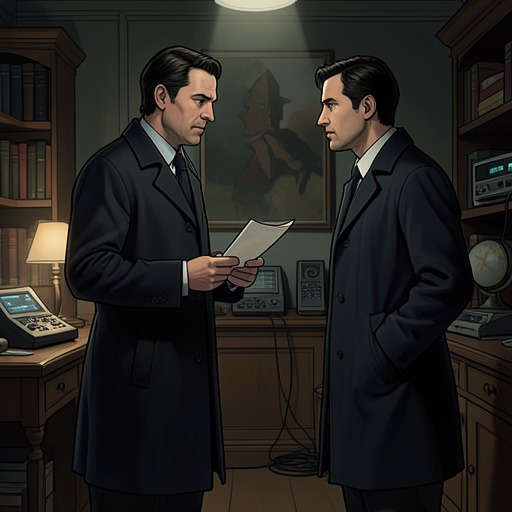
After searching the factory, Harry forces open a door and steps into a windowless room roughly three metres square. It smells of ammonia. His flashlight picks out a black folding chair, a desk, a lamp, and a Dell monitor. The keyboard’s E and N keys are intact. The desktop is orderly, its edges cleanly sanded and without blue marks. A wastebasket contains strips of paper that look as though pictures have been cut up. A copy of Dagbladet has also been cut, and the headline left above the missing piece refers to someone dying in an avalanche. Harry recognizes that the room is connected to the case.
On the wall above the desk are pictures of Mark Olsen, Charlotte Lolles, Borgny Stem-Myhre, Adele Vetlesen, Elias Skog, Jussi Kolkka, and Tony Leike. Some are newspaper clippings; others appear to have been printed from online editions. Adele’s image is different: a grainy enlargement of a photograph taken through a car’s side window shows her in profile in the passenger seat, which is covered in plastic, with a long yellow-handled knife protruding from her neck. Computer-printed letters hang below the pictures. The arrangement turns the room into a record of the victims and their connection to the case, while the unusual photograph of Adele points toward a killing carried out in a prepared vehicle.
Harry’s later explanation gives the room a further role in the sequence of crimes. He believes the killer had to secure a secluded base for working without interruption or fear of discovery, then began mapping the victims and planning precisely. In this reconstruction, Adele had to die first because she alone among those at Hävasshütte knew the killer’s full identity. The factory is therefore not merely a place where evidence was stored: it is where the investigation’s scattered victims become a deliberately organized pattern.
Fire and Narrative Significance
The room also contains a page from the Hävasshütte guest register. As the fire breaks out, Harry reaches for it. The event is later described not as a true explosion but as an explosive fire: a spark from electrical cables ignites ammonia gas in a box, which in turn ignites the PSG paint used on the ceiling and part of the wall. The ordinary materials of the building become a chain of danger, and the clue Harry is trying to recover remains just beyond his reach as the flames spread.
A police officer brings a fire extinguisher and a hose to the doorway. The extinguisher discharges a brownish-yellow stream where white foam should have emerged; the liquid behaves like fuel, and the flames race along it toward the officer, who stands in shock with the handle still pressed. Harry understands why the extinguisher had been conspicuously displayed in the breakroom, like an exhibit inviting someone to use it. The scene leaves the room’s apparent practical safeguards implicated in the danger without establishing, in this account, who arranged them.
Kadok Factory thus changes from a relic of failed industry into a concealed theater of control. Its decay hides the killer’s work from public view; its interior gathers the murder victims into one visual inventory; and its fire makes the recovery of evidence physically perilous. Harry’s description of the room as a headquarters also links its staged order to the killer’s apparent desire to control not only the crimes but their meaning. The factory’s decisive importance lies in that collision: a place abandoned by its owners becomes the place where the investigation finds the murders arranged, and where the evidence is nearly consumed along with the room.